
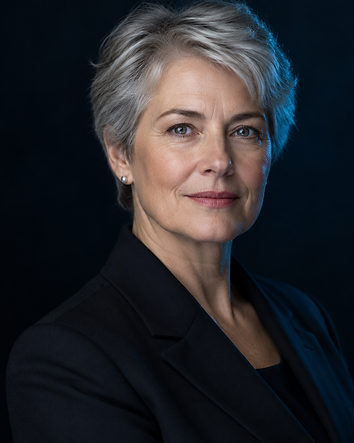
Dr. Ingrid Halvorsen
Chair of the Steering Council
Led a national metrology institute for eleven years before joining the Council. Her work on traceable measurement underpins the framework's verification model.
Oslo · Zürich

The World Quantum Council exists because the quantum leap will not wait for governance to catch up. We are a global non-profit building the shared measurement, trust and accountability standards that make an infinite computing future safe to depend on.
What does a quantum result actually mean — and who is accountable for it?
In 2019, a small group of metrologists, cryptographers and standards lawyers met in Zürich with a complaint rather than a proposal. Every quantum announcement of the previous decade had been true on its own terms and incomparable to every other. Fidelity meant one thing in one laboratory and something adjacent in another. Buyers, regulators and insurers were being asked to make consequential decisions from numbers that could not be placed side by side.
The Council was founded to fix that, and to fix it before the technology became load-bearing. What began as one working group on measurement axes is now twelve, spanning verification, trust interfaces, security baselines and regional enablement — with members on five continents and volunteers who review every draft before it is published.
We are deliberately not an advocacy body. We do not predict the timeline of quantum advantage and we do not promote any architecture. We publish definitions, verification procedures and accountability mechanisms that remain useful whichever platform wins.

At a glance
Council seats are earned through contribution, never purchased. No single vendor, state or funder holds a blocking position on a published standard.
Drafts, comments and ratification minutes are public by default. The record of how a standard was written matters as much as the standard itself.
We publish definitions, not aspirations. If a claim cannot be measured, we say so plainly rather than inventing a metric that flatters it.
Quantum computing is a public-interest technology. Our measure of success is what it enables for people who will never operate a quantum computer.
These are the three commitments the Council was constituted to deliver, and the only three we report against each year.
Establish a common, equivalent way of measuring quantum capability across hardware platforms — so that performance claims mean the same thing everywhere they are read.
Ensure that the security and accountability of quantum systems are designed in from the beginning, not retrofitted after deployment at scale.
Build a member and volunteer network in which standards are written by the people who must live by them — across continents, sectors and disciplines.
Nine elected seats, three-year terms, a maximum of two consecutive terms. The four officers below serve the current cycle.
Chair of the Steering Council
Led a national metrology institute for eleven years before joining the Council. Her work on traceable measurement underpins the framework's verification model.
Oslo · Zürich
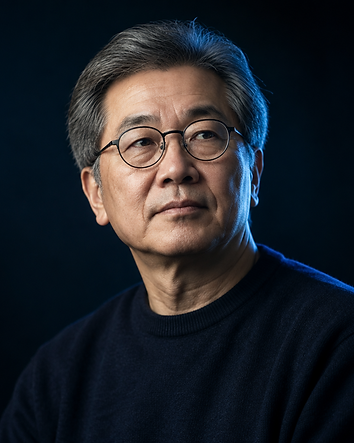
Vice-Chair, Standards
Experimental physicist and cross-platform benchmarking lead. Chairs the group that reconciles superconducting, photonic and ion-trap reporting.
Tokyo
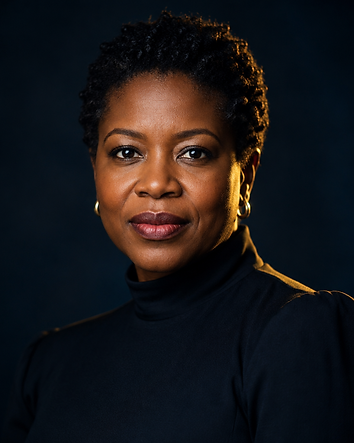
Vice-Chair, Trust & Security
Former policy lead for post-quantum cryptography. Directs the Council's work on the security consequences of effectively unbounded computation.
Lagos · Geneva
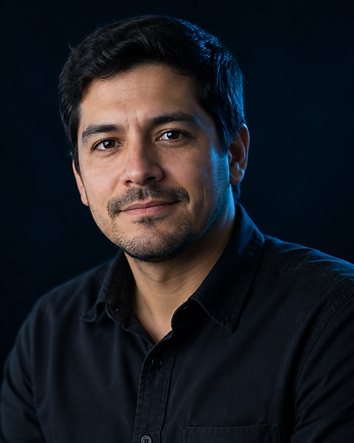
Secretary-General
Spent a decade building multilateral research programmes. Responsible for the secretariat, the assembly cycle and the Council's non-profit governance.
Bogotá · Geneva
The World Quantum Council is a non-profit association registered in Switzerland. It holds no equity in any quantum hardware company, accepts no funding that carries voting rights, and publishes its audited accounts annually.
Standards are ratified by member institutions, one vote each, regardless of size or contribution. Working groups draft; the Steering Council administers; the membership decides. No single party, including the secretariat, can publish a standard alone.
Every draft carries a ninety-day public comment period, and every comment received — including those rejected — is published alongside the ratified text.
Institutional record
Membership, volunteering and partnership all begin with one form.


